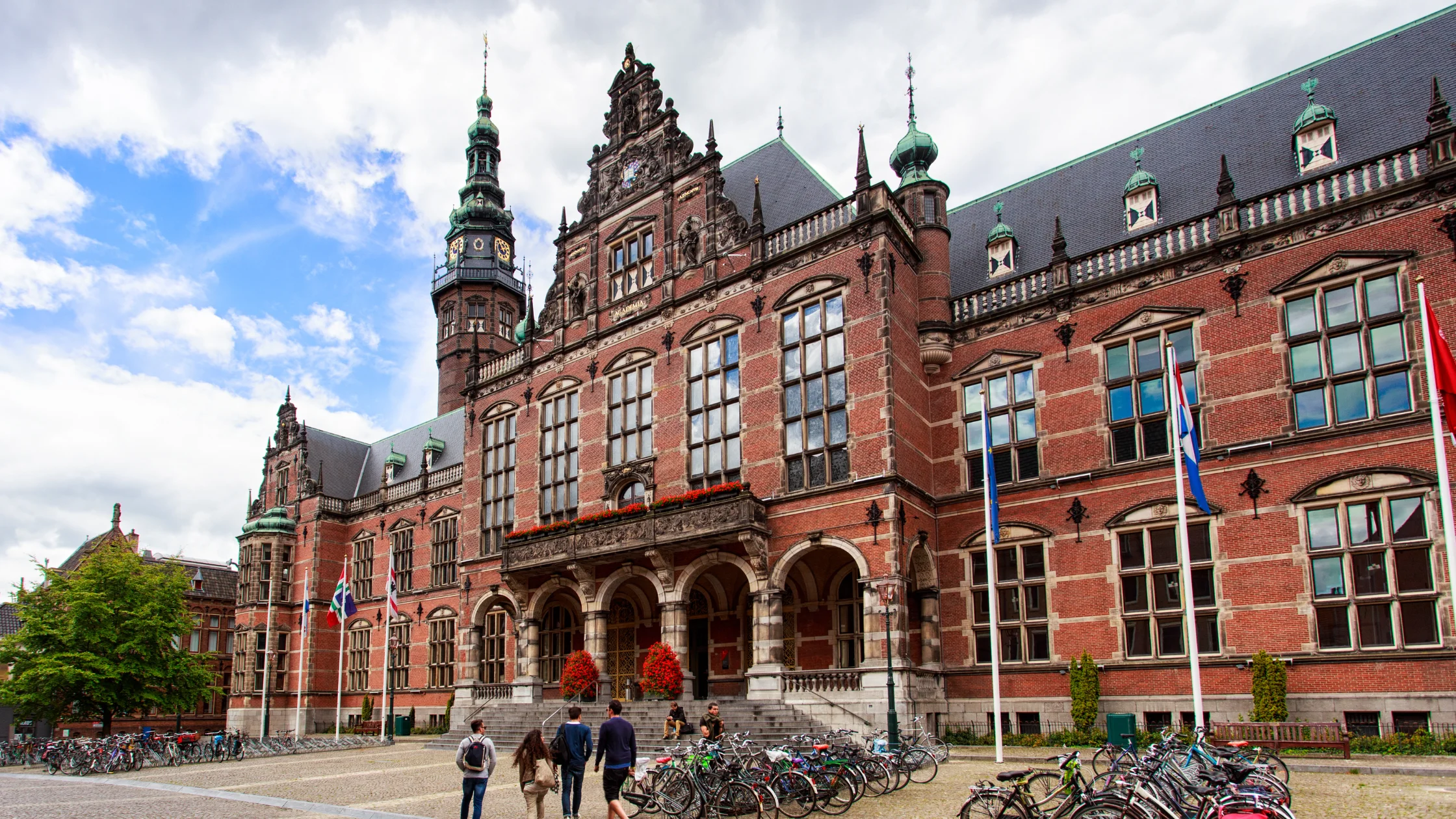
Founded in 1614, the University of Groningen is one of the oldest and most prestigious research universities in the Netherlands. Located in Groningen, the university is internationally recognised for academic excellence, innovative research, and a highly international learning environment. It consistently ranks among the Top 100 universities worldwide and welcomes students from more than 120 countries. The university is home to over 37,000 students, including a large international student community. It is particularly renowned for excellence in Artificial Intelligence, Computer Science, Data Science, Business, Economics, Engineering, Psychology, Law, Life Sciences, Energy, and Environmental Sciences. With more than 180 English-taught degree programmes, the University of Groningen is a popular destination for international students seeking a globally recognised education in Europe. Whether you're planning to pursue a bachelor's degree, master's programme, or PhD, this guide provides an overview of University of Groningen admissions, available programmes, scholarships, admission requirements, and career opportunities for international students.
| Label | Value |
|---|---|
| Location | Groningen, Netherlands |
| Program Levels | UG · Master's · MBA · PhD |
Which Program Level Fits You?
The University of Groningen offers undergraduate, postgraduate, and research programmes across a broad range of disciplines.
| Program Level | Overview |
|---|---|
| Bachelor's (Undergraduate) | Undergraduate programmes in Computer Science, Artificial Intelligence, Business, Economics, Psychology, Law, Engineering, Life Sciences, Arts, and Social Sciences. |
| Master's (Postgraduate Taught) | Advanced master's programmes in Artificial Intelligence, Data Science, Computer Science, Business, Finance, Energy, Law, Public Health, and more. |
| Research Master's & PhD | Research-intensive master's and doctoral programmes supported by internationally recognised faculty and advanced research institutes. |
Admission Requirements
Admission requirements vary depending on the programme and level of study. Applicants must meet programme-specific academic and English language requirements.
| Requirement | Typical Requirement |
|---|---|
| Academic Qualifications | Strong academic performance with programme-specific entry requirements |
| GPA | Competitive academic record |
| IELTS Academic | Generally 6.5–7.0+ depending on the programme |
| TOEFL iBT | Generally 90–100+ depending on the programme |
| Cambridge English | Accepted for eligible programmes |
| Other Requirements | |
| Academic transcripts, motivation letter, CV/résumé (where applicable), letters of recommendation, and programme-specific documents |
Cost of Attendance
The University of Groningen tuition fees vary depending on the programme and whether students are from the EU/EEA or outside the EU/EEA. Students should also budget for accommodation, food, health insurance, transportation, books, and personal expenses while studying in Groningen, Netherlands. Compared with many major European capitals, Groningen offers a relatively affordable cost of living while providing a vibrant student environment and excellent academic facilities.
Scholarships & Financial Aid
The University of Groningen offers several merit-based scholarships, fellowships, and external funding opportunities for international students pursuing bachelor's, master's, and PhD programmes. Popular scholarship opportunities include:
- NL Scholarship
- Eric Bleumink Fund Scholarship
- Faculty-specific Scholarships
- Graduate Fellowships
- Research Grants
- PhD Funding Opportunities
- Erasmus+ Scholarships
- External Government Scholarships
- Departmental Scholarships
The university also provides access to its Grantfinder, which helps students search for scholarships offered by the Dutch government, the European Union, international organisations, and external funding bodies.
Campus Life & Student Experience
The University of Groningen offers a vibrant and international student experience in one of Europe's best student cities. Students benefit from:
- More than 150 student associations and clubs
- Modern research laboratories and innovation centres
- Career counselling and internship support
- Entrepreneurship and startup initiatives
- Undergraduate research opportunities
- International exchange programmes
- Sports, recreation, and wellness facilities
- A lively student city where nearly one in four residents is a student
Groningen is well known for its safe environment, cycling culture, historic city centre, and welcoming international community.
Research & Global Reputation
The University of Groningen is internationally recognised for research excellence and innovation. Highlights include:
- Ranked among the Top 100 universities worldwide
- One of the oldest universities in the Netherlands, founded in 1614
- Strong research in Artificial Intelligence, Machine Learning, Data Science, Energy Transition, Sustainable Development, Psychology, Biomedical Sciences, Chemistry, Astronomy, and Economics
- Home to internationally recognised faculties including the Faculty of Economics and Business, Faculty of Science and Engineering, and Faculty of Behavioural and Social Sciences
- Strong partnerships with employers and research organisations including Philips, Shell, Deloitte, KPMG, ING, IBM, Google, Siemens, Unilever, and leading European research institutes
- Excellent graduate employability supported by strong international research collaborations and industry partnerships
Visa & Post-Study Work
International students from outside the EU/EEA generally require a Dutch Student Residence Permit to study in the Netherlands. After graduation, eligible students may apply for the Orientation Year Visa, which allows graduates to live and work in the Netherlands for up to one year while searching for employment or starting a business.
| Category | Information |
|---|---|
| Student Residence Permit | International students from outside the EU/EEA generally require a Dutch Student Residence Permit (MVV/Residence Permit) to study in the Netherlands. |
| Orientation Year (Zoekjaar) | Eligible graduates may apply for the Orientation Year (Zoekjaar) Visa, allowing them to live and work in the Netherlands for up to one year after graduation. |
How to Apply
Every study level follows a similar application process, although deadlines, admission criteria, and required documents vary depending on the programme.
- Undergraduate — choose your programme — Choose your preferred programme. Apply through Studielink, the Dutch national university application system.
- Undergraduate — submit documents — Submit academic transcripts and supporting documents. Meet English language and programme-specific requirements.
- Undergraduate — accept your offer — Receive and accept your admission offer. (University of Groningen).
- Postgraduate — apply online — Apply through the University of Groningen online application portal. Upload academic transcripts and required documents.
- Postgraduate — meet requirements and accept — Meet programme-specific admission requirements. Receive your admission decision. Accept your offer and complete your Dutch student visa or residence permit process.
- Complete your Dutch student residence permit process — After accepting your offer, complete your Dutch student visa or residence permit process.
FAQs About Studying Here
Is the University of Groningen good for international students?
Yes. The University of Groningen is one of the Netherlands' top research universities, offering globally recognised degrees, excellent research opportunities, a highly international campus, and strong graduate employability.
Does the University of Groningen offer scholarships for international students?
Yes. The university offers the NL Scholarship, Eric Bleumink Fund Scholarship, faculty-specific scholarships, graduate fellowships, Erasmus+ funding, and access to numerous external scholarship opportunities.
What English language tests does the University of Groningen accept?
The University of Groningen accepts IELTS Academic, TOEFL iBT, Cambridge English qualifications, and other approved English language proficiency tests. Programme-specific minimum score requirements may vary.
How do I apply to the University of Groningen?
Undergraduate applicants apply through Studielink, while postgraduate applicants apply through the University's online admissions portal.
Can international students work after graduating from the University of Groningen?
Yes. Eligible graduates may apply for the Orientation Year Visa, allowing them to stay in the Netherlands for up to one year to seek employment or start a business.
Does the University of Groningen provide career support?
Yes. The University of Groningen offers career counselling, internship support, employer networking events, entrepreneurship programmes, research opportunities, and comprehensive career development services. Its strong European industry partnerships help graduates launch successful international careers.
Get personalized study abroad advice
Chat with our AI advisor about this university guide — tailored to your profile.
Start conversation